CCTV News: What smart products do older adults want most? The answer is hidden in this ‘Wishing Wall’
China’s elderly population continues to grow, and the country has rolled out a series of policies to continuously promote the expansion and upgrading of age-friendly products and services. So what exactly do older adults need? Can the products and services currently on the market meet these expectations? Reporters visited multiple locations to listen to the real thoughts of older adults.
01Rapid development of smart technologyWhat kind of later life do you want?
Some look forward to new technology, some value health and safety, and some hope for companionship to relieve loneliness. Data shows that in the first half of 2025, the manufacturing of smart and wearable devices for older adults grew by more than 30%. Silver consumption is no longer centered only around ‘old, weak, and sick’; smart technology is entering the lives of more and more older adults.
Sun Mingxia, Director of the Institute of Social Research at the Shandong Provincial Institute of Macroeconomics: People are paying more attention to quality experience and emotional value, and are more focused on new consumption formats such as smart technology, health and wellness, and fashionable trends. Their lifestyle is shifting from frugal elderly care centered on basic old-age security to proactive elderly care that emphasizes quality and dignity.
02Beneath Enormous PotentialCan Supply Keep Up with Demand?
Older people’s attitudes toward elderly care are shifting from ‘fearing hassle’ to ‘seeking novelty,’ and ever-escalating real-world needs are right before our eyes. Can the current market supply keep up with older people’s new expectations? The reporter continued to visit a number of different types of silver-haired products stores to see whether today’s age-friendly products on the market can meet the diverse needs of older people.
Guo Yuyu, Director of the Silver Economy Operations Center at a certain group: It is also the lightest walking stick on the market right now; it can rotate 360 degrees—you can feel it for yourself.
A single small walking stick comes in dozens of styles, corresponding to the needs of different body weights and different scenarios. What the reporter noticed first was the refinement of basic essential products. Citizen Zhou Zhaoren: There’s plenty of choice. This one is for when you’re out walking, get tired, and sit down to rest a while—quite nice.
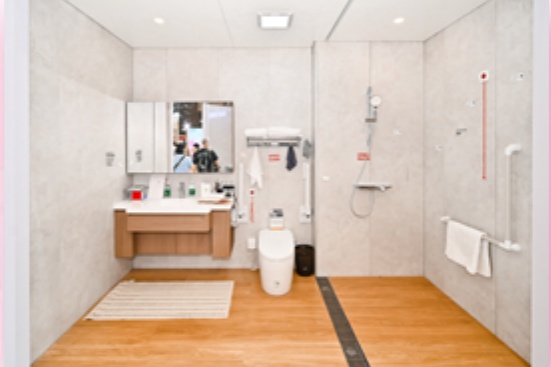
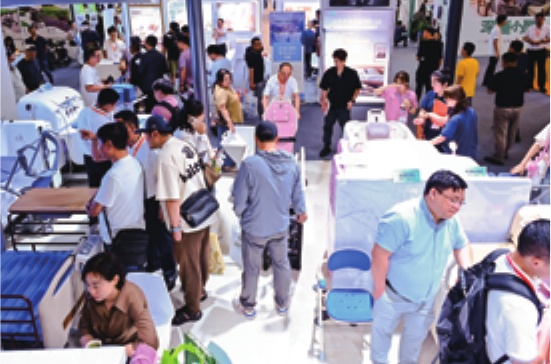
But after visiting several stores, one can also see that most products on the market revolve around a few essential categories: mobility assistance, rehabilitation, and home safety. Among smart products, the more common ones are safety and health products such as millimeter-wave fall-detection monitors and one-touch call devices. At the same time, the reporter also noticed that although customers stream into the stores, most are older people with clear essential needs or their children; active seniors who retired only a few years ago are, by contrast, rarely seen.
Citizen Tang Renjie: There aren’t many silver-haired stores around, so we can only get care from the internet or through community outreach.
Citizen Wei Yongqing: They need to develop new things so we have more choices. Right now it’s not very satisfying; there needs to be more development.
Where are the novel products that older people are looking forward to? The reporter found a trendy silver-haired store in Shanghai. This store is located in a densely populated commercial district in Shanghai, with a dazzling array of various products.
This type of new store targets the active elderly group that traditional channels cannot reach, turning age-friendly products into everyday consumer goods. But looking at the whole country, such new business formats are still mainly concentrated in a few cities such as Beijing, Shanghai, and Guangzhou.
Sun Mingxia, Director of the Social Research Institute of the Shandong Provincial Macroeconomic Research Institute: At present, China’s elderly products market has certain regional disparities, which also reflects the mismatch in the supply and demand structure of the silver-haired market. The three cities of Beijing, Shanghai, and Guangzhou alone account for nearly 20% of the country’s total silver economy, while the vast county-level lower-tier markets and ordinary cities have huge silver-haired consumer groups, and their supply of elderly care products and services still lags noticeably behind first-tier cities.
Experts told the reporter that while first-tier cities continue to see emerging new business formats, the supply in broader markets is relatively limited. This misalignment in the supply and demand structure is precisely an important direction for the industry’s next supply upgrade.
03Let age-friendly technologytruly understand older people
The needs of the elderly population have already evolved and moved forward, but the pace of market supply has not yet fully caught up. How can older adults with different needs all find suitable age-friendly products that satisfy them? How can high-quality age-friendly technology benefit more seniors? We continue to explore paths to break through the impasse.
CCTV reporter Song Wenjin: In this silver-haired store, we saw a wall covered with sticky notes, all filled with various wishes from the elderly—AI reading glasses, simple cameras—and the store regularly updates its products based on the seniors’ wishes.
Whatever the elderly want, they write it on a note and stick it up. Every three months, the store adjusts its products according to the seniors’ needs. CCTV reporter Song Wenjin: Would a wish from just one person also be fulfilled?
Ma Zhiwen, General Manager of a Shanghai company: Of course, because we believe every senior’s wish represents the needs of a certain group, so we take it very seriously and see whether we can find products on the market that meet their needs.
It’s not just that goods are adjusted according to demand. In response to the consumption habit of seniors who prefer to try first and decide later, the store has also adapted its purchasing methods. For example, for the exoskeleton rehabilitation robot in the store, the store has specially launched a rental service, and many seniors come specifically to inquire and try it out.
The rental model lowers the threshold for trying, so seniors don’t have to bear high costs all at once—they can experience first and then choose. Behind this is a shift in the supply approach of the silver-haired market.
At the Jinan Senior University, the reporter saw that the school has specially set up a smart age-friendly model room, with companion robots and various smart health and wellness devices brought in, so seniors can try them out in their spare time after class.
Zhao Bing, Vice President of Jinan Senior University: Senior universities now actually serve as intermediaries and hubs at both the supply and demand levels. The feedback has been very positive; some students ask how to buy these products, and we also use our feedback channels to offer suggestions to companies on product R&D and optimization.
At the robotics training ground for the elderly care sector in Qingdao, Shandong, 45 companies and 217 products have already been brought in for training and iterative refinement. Products that have been verified in real-world settings are also gradually entering real elderly care scenarios. At the smart elderly care robot service station in Yizhuang, Beijing, more than 40 various elderly care robots have been deployed, covering functions such as meal delivery and assisted dining, rehabilitation training, and emotional companionship.
Tian Kan, Executive Vice President of the Institute of Elderly Care Services and Management at Nanjing University of Chinese Medicine: Judging from the current pace of robot development, I think the time for them to enter households will not be long, but at least for now, robot products will not be very cheap. Of course, there are many marketing models for such high-end consumer products; for example, for those with special needs, rental is available, and various marketing methods can all be developed.
Technology is being refined, and efforts are also being made to lower the threshold for implementation. This year, Shandong included eight categories of products, including walking-assistance exoskeletons and hearing aids, in the consumer goods trade-in subsidy program; Shanghai has built more than 220 community rental points, where exoskeletons, companion robots, and smart nursing beds can all be rented monthly, and eligible elderly people can also enjoy rental subsidies of 50% to 70%. At the national level, platforms are also being continuously built. Multiple departments have clearly proposed promoting the deep application of artificial intelligence and big data in the elderly care sector, with a focus on developing smart elderly care products such as health monitoring, safety early warning, rehabilitation nursing, and emotional companionship; the ‘Three-Year Action Plan for Expanding Capacity and Improving Quality of the Rehabilitation Assistive Devices Industry’ further specifies that by 2028, more than 50 key industrial technologies should be breakthroughs, promoting a comprehensive leap of rehabilitation assistive devices from ‘usable’ to ‘easy to use’ and ‘smart.’
From the handwritten notes one after another on the wish wall, to the robots repeatedly debugged in the training base, and then to the policy networks rolled out layer by layer, the distance from ‘elderly care’ to ‘enjoying old age’ is slowly being narrowed through these solid steps.
Some look forward to new technology, some value health and safety, and some hope for companionship to relieve loneliness. Data shows that in the first half of 2025, the manufacturing of smart and wearable devices for the elderly grew by more than 30%. Silver-haired consumption is no longer centered only around ‘the elderly, the weak, and the sick’; smart technology is entering the lives of more and more seniors.
Sun Mingxia, Director of the Institute of Sociology, Shandong Provincial Academy of Macroeconomic Research:They place greater emphasis on quality experiences and emotional value, and pay more attention to new consumer trends such as smart technology, health and wellness, and fashionable novelties. Their lifestyle is shifting from a frugal old age centered on basic pension security to an active old age that places greater emphasis on quality and dignity.
The elderly’s attitudes toward retirement care are shifting from ‘avoiding hassle’ to ‘seeking novelty,’ and their ever-upgrading real-world needs are right in front of us. Can the current market supply keep up with seniors’ new expectations? Our reporter continued to visit several different types of silver-haired product stores to see whether today’s age-friendly products on the market can meet the diverse needs of older adults.
Guo Yuyu, Director of the Silver Economy Operations Center at a certain group:It is also the lightest cane on the market right now. It can rotate 360 degrees—you can feel it for yourself.
A single small walking cane comes in dozens of styles, catering to different body weights and different scenarios. What the reporter noticed first was the refinement of basic essential products.
Citizen Zhou Zhaoren:There are plenty of choices. This one is for sitting down and resting a while when you get tired walking outside—it’s quite good.
But after visiting several stores, one can also see that most products on the market revolve around a few essential categories: walking assistance, rehabilitation, and home safety. Among smart products, the more common ones are safety and health products such as millimeter-wave fall-detection monitors and one-touch call devices. At the same time, the reporter also noticed that although the stores were bustling with customers, most were seniors with clear essential needs or their children; energetic seniors who had retired only a few years ago were rarely seen.
Citizen Tang Renjie:There aren’t many senior-focused stores around, so we can only get care from the internet or through community support.
Citizen Wei Yongqing:New things still need to be developed to give us more choices. Right now it’s not quite satisfying—it needs further development.
Where are the novel products that older people are looking forward to? The reporter found a trendy silver-haired store in Shanghai. This store is located in a densely populated commercial district in Shanghai, with a dazzling array of various products.
This type of new store targets the active elderly group that traditional channels cannot reach, turning age-friendly products into everyday consumer goods. But from a nationwide perspective, such new business formats are still mainly concentrated in a few cities such as Beijing, Shanghai, and Guangzhou.
Sun Mingxia, Director of the Social Research Institute of the Shandong Provincial Macroeconomic Research Institute:At present, China’s elderly products market has certain regional and tiered differences, which is also a reflection of the mismatch in the supply and demand structure of the silver economy market. The three cities of Beijing, Shanghai, and Guangzhou alone account for nearly 20% of the country’s total silver economy, while the vast county-level lower-tier markets and ordinary cities have huge silver-haired consumer groups, and their supply of elderly care products and services still has a relatively obvious gap compared with first-tier cities.
Experts told reporters that on one hand, new business formats are constantly emerging in first-tier cities, while on the other hand, supply in broader markets is relatively homogeneous. This misalignment in the supply and demand structure is precisely an important direction for the industry’s next supply upgrade.
The needs of the elderly population have evolved forward, but the pace of market supply has not yet fully kept up. How can we ensure that elderly people with different needs can all find satisfactory age-friendly products? How can high-quality age-friendly technology benefit more seniors? We continue to explore paths to break through the impasse.
CCTV reporter Song Wenjin:In this silver-haired store, we saw a wall covered with sticky notes, all filled with various wishes from the elderly—AI reading glasses, simple cameras—and the store regularly updates its products based on the seniors’ wishes.
Whatever the elderly want, they write it on a note and stick it up. Every three months, the store adjusts its products according to the seniors’ needs.
CCTV reporter Song Wenjin:Would you also fulfill a wish like this from just one person?
Ma Zhiwen, General Manager of a Shanghai company:Of course, because we believe every senior’s wish represents the needs of a certain group, so we take it very seriously and see whether we can find products on the market that meet their needs.
It’s not just that products are being adjusted to follow demand; in response to the consumption trait of older people, who prefer to try first and decide later, stores are also adapting their purchasing methods. For example, for the exoskeleton rehabilitation robot in the store, the store has specially launched a rental service, and many older people come specifically to inquire and try it out.
By lowering the threshold for trying through a rental model, older people do not have to bear a high cost all at once; they can try first and then choose. Behind this, the supply approach in the silver-haired market is changing.
At Jinan Senior University, the reporter saw that the school has specially set up a smart senior-friendly model room, with companion robots and various smart health and wellness devices brought in, so older people can try them hands-on after class.
Zhao Bing, Vice President of Jinan Senior University:Senior universities now actually serve as intermediaries and hubs at both the supply and demand levels. They report that the results are very good. Some students ask how to buy this, and we also use our feedback channels to offer companies suggestions for product R&D and optimization.
At the robotics training ground for the health and wellness sector in Qingdao, Shandong, 45 companies and 217 products have already settled in for training and iterative refinement. Products verified in real-world settings are also gradually entering real elderly care scenarios. At the smart health and wellness robot elderly care station in Yizhuang, Beijing, more than 40 types of health and wellness robots have been deployed, covering functions such as meal delivery and assisted dining, rehabilitation training, and emotional companionship.
Tian Kan, Executive Vice President of the Institute of Elderly Care Services and Management at Nanjing University of Chinese Medicine:Judging from the current pace of robot development, I think the time before they can enter households will not be long, but at least for now robot products will not be very cheap. Of course, there are many marketing models for this kind of high-end consumer product; for example, for those with special needs, rental is available, and various marketing methods can all be developed.
Technology is being refined, and efforts are also being made to lower the threshold for real-world adoption. This year, Shandong included 8 categories of products, such as walking-assistance exoskeletons and hearing aids, in the consumer goods trade-in subsidy program; Shanghai has built more than 220 community rental sites, where exoskeletons, companion robots, and smart nursing beds can all be rented by the month, and eligible older adults can also enjoy a 50%–70% rental subsidy. At the national level, platforms are also being continuously established. Multiple departments have clearly proposed promoting the deep application of artificial intelligence and big data in the elderly care sector, with a focus on developing smart elderly care products such as health monitoring, safety alerts, rehabilitation nursing, and emotional companionship; the ‘Three-Year Action Plan for Expanding Capacity and Improving Quality of the Rehabilitation Assistive Devices Industry’ further specifies that by 2028, more than 50 key industrial technologies should be breakthroughs, driving rehabilitation assistive devices to make a comprehensive leap from ‘usable’ to ‘easy to use’ and ‘smart.’
From the handwritten notes one after another on the wish wall, to the robots repeatedly debugged in the training base, and then to the policy networks rolled out layer by layer, the distance from ‘elderly care’ to ‘enjoying old age’ is slowly being closed through these solid steps.
Source: CCTV News
Statement: This platform is dedicated to industry sharing and exchange, and the articles do not represent the platform’s views. Copyright belongs to the original author. If there are errors in the source attribution or infringement of your lawful rights and interests, please contact us, and we will promptly correct or delete it. Thank you.